
Category Archives: Whatcom County Criminal Defense

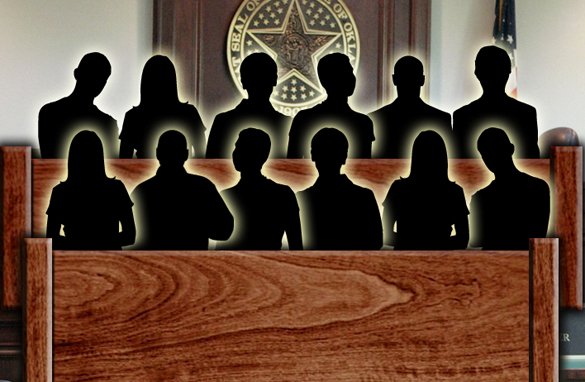
State v. Irby: A Juror’s Bias Reverses Conviction

Rigged: Racial Bias in Jury Selection | The Portland Observer

In State v. Irby, The WA Court of Appeals reversed the murder conviction of a defendant because a juror’s remarks during jury selection indicated her express bias against the defendant.

In reaching their decision, the court reasoned that when a juror makes an unqualified statement expressing actual bias, seating the juror is a manifest constitutional error that may be raised on appeal. Also, a juror’s statement during voir dire that she “would like to say he’s guilty” requires a new trial because no inquiry was made from the Prosecution that would have neutralized the statement.

In 2005, James Rock was murdered at his home in rural Skagit County. The investigations led to Terrance Irby, a known associate of Rock. Rock’s neighbors had seen Irby in the neighborhood on March 8. Irby was soon located in custody in Marysville. He had been arrested there on March 8, after running a red light and attempting to elude police. In Irby’s truck, officers found Rock’s weapons and boots splashed with Rock’s blood.

Irby was arrested and charged with Aggravated Murder in the First Degree, Burglary in the First Degree, and Felony Murder.

Oddly enough, in 2011, the WA Supreme Court had already reversed Irby’s convictions because of a violation of his right to a public trial. The violation occurred when the court and the attorneys agreed by e-mail, without Irby’s participation, to dismiss some of the potential jurors before voir dire began.

The State recharged the case. He awaited trial.  Irby had three different standby counselors while his case was pending. Irby fired all of them before the second trial began. As a consequence, the trial court granted Irby’s request to proceed pro se; or in other words, by himself without defense counsel.

On March 5, 2013—the first day scheduled for jury selection —Irby voluntarily absented himself from the proceedings. Irby said he did not believe he could get a fair trial in Skagit County. Trial became somewhat of a circus. By Irby’s choice, the trial proceeded before a jury that had been picked without any participation by Irby. Every day before trial resumed, the trial court had Irby brought from the jail into the courtroom so that the court could verify that he still wanted to remain absent.

The jury convicted Irby as charged on March 12, 2013.

The primary issue on appeal was whether juror bias – specifically, the bias of the juror who said she “would like to say he’s guilty” – violated Irby’s right to a fair and impartial jury.

In reaching its decision the Court of Appeals reasoned that under RAP 2.5(a)(3), a party may raise for the first time on appeal a “manifest error affecting a constitutional right.” Here, criminal defendants have a federal and state constitutional right to a fair and impartial jury. Criminal defendants have a federal and state constitutional right to a fair and impartial jury. The error alleged here, seating a biased juror, violates this right.

Furthermore, the court reasoned that seating that particular juror manifested actual bias. Under RCW 4.44.170(2) actual bias is “the existence of a state of mind on the part of the juror in reference to the action, or to either party, which satisfies the court that the challenged person cannot try the issue impartially and without prejudice to the substantial rights of the party challenging.” The Court of Appeals said both thetrial judge and the Prosecutor failed to elicit any assurances from that juror that she had an open mind on the issue of guilt. This was wrong.

The Court of Appeals concluded that the juror at question demonstrated actual bias and that seating her was manifest constitutional error requiring reversal of all convictions and remand for a new trial.

My opinion? It’s awful and tragic that Mr. Rock died a violent and painful death. My condolences go to his family and everyone who cared for him. Anyone in their circumstance would want the murderer brought to justice and convicted for these horrible crimes.

However, gaining convictions is meaningless if the courts and prosecutors violate a defendant’s rights in the process. It devalues the entire criminal justice system. It loses credibility and coherence.

Perhaps the Judge and Prosecutor failed to make a record of “rehabilitating” that particular juror of her biases – a process which happens at EVERY jury trial I’ve conducted – because neither Mr. Irby nor a criminal defense attorney was at jury selection to attempt to strike that particular juror for cause. Neverthless, all of us now have a greater understanding of why it’s necessary for attorneys to engage the colloquy of ensuring that jurors are NOT biased – even when they most certainly are.

Eliminating biased jurors from trial not only ensures a fair trial for the defendant. It also creates a court record for ensuring that jury verdicts are not overturned on appeal. As this one was.

Good decision.

Please contact my office if you, a friend or family member are charged with a crime. Hiring an effective and competent defense attorney is the first and best step toward justice.


Rodriguez v. United States: Nonconsensual Dog Sniff of Car Held Unconstitutional

In State v. Rodriguez, the United States Supreme Court held that absent reasonable suspicion, police extending a traffic stop to conduct a dog sniff violates the Constitution’s shield against unreasonable seizures.

In summary, the Supreme Court ruled that (1) the 4th Amendment does Fourth Amendment does not tolerate a dog sniff conducted after completion of a traffic stop, (2) a police stop exceeding the time needed to handle the matter for which the stop was made violated the Constitution’s shield against unreasonable seizures, (3) a seizure justified only by a police-observed traffic violation becomes unlawful if it is prolonged beyond the time reasonably required to complete the issuing of a ticket for the violation, and (4) a stop may, however, be prolonged for a dog sniff when there is independent information giving rise to an individualized suspicion that the occupants of the car are involved in a drug offense.

The 6-3 ruling is indeed a big win for the 4th Amendment.

In this case, Officer Struble, a K-9 officer, stopped the defendant Rodriguez for driving on a highway shoulder. After issuing a warning for the traffic offense Officer Strubble asked Rodriguez for permission to walk his dog around the vehicle. Rodriguez refused. Struble detained him until another police officer arrived. Struble’s dog performed a search and alerted to the presence of drugs in the vehicle. The dog found methamphetamine.

Seven or eight minutes elapsed between the time Struble issued the warning and the dog alerting to the presence of contraband.

Rodriguez faced several federal drug charges. Although he moved to suppress evidence seized from the vehicle on the basis that Officer Struble prolonged the traffic stop without reasonable suspicion in order to conduct the dog sniff search, the lower court denied Rodriguez’s motion. Eventually, the United States Supreme Court weighed in on the search and seizure issues.

The Court reasoned that a routine traffic stop is more like a brief stop under Terry v. Ohio than an arrest. Its duration is determined by the seizure’s “mission,” which is to address the traffic violation that warranted the stop and attend to related safety concerns.

Beyond determining whether to issue a traffic ticket, an officer’s investigation during a traffic stop typically includes checking the driver’s license, determining whether there are outstanding warrants against the driver, and inspecting the automobile’s registration and proof of insurance. These checks serve the same objective as enforcement of the traffic code: ensuring that vehicles on the road are operated safely and responsibly.

The court further reasoned that a dog sniff is not fairly characterized as part of the officer’s traffic mission. Also, the Court was concerned that seizing citizens for traffic stops and holding them to conduct a more intrusive search with no evidence of criminal activity beyond the mere traffic stop is unlawful: “The critical question is not whether the dog sniff occurs before or after the officer issues a ticket, but whether conducting the sniff adds time to the stop.

My opinion? Great ruling! It’s rare that the Supreme Court upholds the 4th Amendment these days. Fortunately, this favorable outcome happened because the suspect asserted his rights by refusing the dog sniff. Past rulings from the U.S. Supreme Court limit 4th Amendment protections where suspects DID NOT assert their rights. See Florida v. Bostick.

Yet here’s a case where the suspect did flex their rights. Look at the outcome! It’s a testament – a reminder, if you will – that asserting your rights makes a difference. Great case.

Please contact my office if you, a friend or family member are charged with a crime. Hiring an effective and competent defense attorney is the first and best step toward justice.

Study: Marijuana and Alcohol Doubles Odds for DUI

A Marijuana DUI is Tough to Prove | DUI Lawyer

Marijuana is becoming increasingly legalized in the US for medical and recreational use. A new study analyzes the simultaneous use of alcohol and marijuana. In short, simultaneous users had double the odds of drunk driving, social consequences, and harm to self and others.

The researchers analyzed data from the 2005 and 2010 National Alcohol Survey (n=8,626; 4,522 females, 4,104 males). This was a Random Digit Dial, Computer Assisted Telephone Interview survey of individuals aged 18 and older from all 50 states and DC. Blacks and Hispanics were over-sampled. The study authors assessed differences in demographics, alcohol-related social consequences, harms to self, and drunk driving across simultaneous, concurrent, and alcohol-only using groups.

“We looked at three groups of adults,” explained Meenakshi S. Subbaraman, a corresponding author for the study and associate scientist at the Alcohol Research Group, a program of the Public Health Institute. “One, those who used only alcohol in the previous 12 months; two, those who used both alcohol and cannabis but always separately, or concurrently; and three, those who used both alcohol and cannabis and usually together, or simultaneously.

According to the study, simultaneous users did not necessarily always use cannabis while they drank; the groups were based on how often they drank when using cannabis, and not vice versa.

The study authors found that, compared to adults who solely used alcohol, simultaneous users had double the odds of drunk driving, social consequences, and harms to self. Compared to concurrent users, simultaneous users had double the odds of drunk driving. Simultaneous users also had the heaviest drinking patterns in terms of quantity and frequency.

The research brought interesting conclusions. “If cannabis use becomes more prevalent as U.S. states and other countries continue to legalize it, then we need to be prepared to advise people appropriately,” cautioned Subbaraman. “If you use both substances together, your risk of drunk driving, and possibly other consequences, may be higher than if you stick to using one at a time.”

The study appears in the May 2015 online issue of the journal Alcoholism: Clinical & Experimental Research.

Please contact my office if you, a friend or family member are charged with a crime. Hiring an effective and competent defense attorney is the first and best step toward justice.

State v. Rich: No Reckless Endangerment Found in DUI Case

Reckless Endangerment for the Lord | JD Espinoza

In State v. Rich, the WA Court of Appeals ruled there is no ‘per se’ liability for Reckless Endangerment based on proof of DUI.

Here the defendant was pulled over for driving a stolen vehicle. She was arrested for DUI because she exhibited the effects of having consumed alcohol and her BAC test was over .15. She also had a 9-year-old child in the front seat. The Prosecutor charged the defendant with Possession of a Stolen Vehicle, DUI and Reckless Endangerment.

During trial, the Prosecutor argued that because Rich operated a vehicle while legally intoxicated in violation of the DUI statute, her conduct also satisfies the elements of reckless endangerment. The State also points to the following pieces of “additional evidence” that would support a finding that Rich’s conduct created a substantial risk of death or serious physical injury: (1) Rich endangered a passenger and motorists on a “major public roadway,” (2) she was heavily intoxicated, and (3) she exceeded the speed limit. The jury found Rich guilty of both Reckless Endangerment and DUI.

The case went up on appeal on the issue of whether a jury can find rich guilty on both crimes when the overwhelming evidence suggested she was only guilty of DUI.

Some background is necessary. The Reckless Endangerment statute, RCW 9A.36.050, provides as follows:

A person is guilty of reckless endangerment when he or she recklessly engages in conduct not amounting to drive-by shooting but that creates a substantial risk of death or serious physical injury to another person.

Another provision in the criminal code, RCW 9A.08.010, defines levels of culpability, including recklessness. RCW 9A.08.010 provides, in relevant part:

RECKLESSNESS. A person is reckless or acts recklessly when he or she knows of and disregards a substantial risk that a wrongful act may occur and his or her disregard of such substantial risk is a gross deviation from conduct that a reasonable person would exercise in the same situation.

Here, the Court reasoned that the Prosecutor offered no evidence whatsoever about the presence of other vehicles, motorists, or pedestrians, nor any evidence about the type of road or traffic conditions. Additionally, the police officer who observed Rich drive did not indicate that Rich’s manner of driving posed any danger or caused him to suspect that Rich was impaired.

And even if the jury could infer from an officer’s testimony that Rich was speeding 15 miles per hour faster than the speed limit, the deputy followed Rich because he believed the car was stolen, not because of speeding or for any reason related to the manner in which the car was being operated. This evidence would not, therefore, allow a trier of fact to conclude that Rich’s speed created a substantial risk of death or serious physical injury.

Because the State failed to prove beyond a reasonable doubt that Rich recklessly engaged in conduct that created a substantial risk of death or serious injury to another person, the Reckless Endangerment conviction must be vacated.

My opinion? Good decision. there is no “per se” liability for Reckless Endangerment based on proof of violation of the DUI statute. If the penalties for DUI are thought of as too lenient then the legislature can increase them. If there should be additional offenses tied to DUI, say DUI with a passenger, then they likewise can be implemented by the legislature through the democratic process.

However, courts should remain unwilling to impose such value judgments upon the citizens by shoehorning conduct into the somewhat broad definitions of certain criminal offenses.

Please contact my office if you, a friend or family member are charged with a crime. Hiring an effective and competent defense attorney is the first and best step toward justice.

Whatcom County Jail: An Inmate’s Perspective


The Bellingham Herald discussed Whatcom County Jail’s deplorable and dangerous conditions.

In the article Staff & Inmates Say It’s Time For A New Whatcom County Jail, Sheriff Bill Elfo is reported as saying the current Whatcom County Jail is consistently packed beyond its designed capacity, with conditions that pose safety issues for guards and inmates.

On March 18, Elfo sat down with Bellingham City Council during a special meeting to discuss the need for a new county jail and request the city’s financial support.

The jail’s current legal capacity is somewhere between 298 and 362 inmates, but the average daily population in 2014 was 403 people.

Inmates have broken out the windows in their cells onto the street below and picked away at the grout in their cinder block walls, creating small pass-throughs from cell to cell; sewer lines have backed up into the sheriff’s office; nearly every space – shower rooms, indoor recreation areas – has been used to house inmates at one time or another as the population has fluctuated well beyond capacity.

The video above captures commentary from jail staff, inmates and administration weighing in on the issue.

My opinion? Sure, certain aspects of the criminal justice system are punitive. They’re made to have inmates consider their surroundings and force them to take accountability for the crimes they’re committed.

Nevertheless, the old and overcrowded jail creates significant Human Rights issues and potentially extraordinary liability costs if a worst-case-scenario tragedy happened. According to the National Institute of Corrections recent evaluation of the jail, it was determined that if a fire or other emergency were to happen, such as an earthquake, the loss of life at the jail would be “catastrophic.’ Though the building is largely cinder block, mortar and concrete, if mattresses, clothing and/or other items were set on fire, smoke could easily fill a room or floor of the building and suffocate those inside.

It’s time for a new jail with better living conditions.

Please contact my office if you, a friend or family member are charged with a crime. Hiring an effective and competent defense attorney is the first and best step toward justice.

State v. Manlove: “Deliberate Cruelty” Enhancements Apply to Property Crimes.

In State v. Manlove, the Division III Court of Appeals held that a upward sentencing enhancement applies to Residential Burglary and other property crimes if a jury finds the defendant’s conduct during the commission of crime manifested deliberate cruelty to the victim.

In 2005, Paula Parker and her then-husband purchased a remote cabin on forty acres in Stevens County, Washington. The couple became acquainted with their neighbor, David Manlove, whose home lay a half mile from Parker’s cabin.

Paula Parker divorced in 2011, and she retained sole custody of the cabin. Parker and Manlove occasionally joined one another at each other’s homes for dinner. The two enjoyed a pastoral, idyllic, and platonic relationship, until . . .

Paula Parker went on vacation from June 19 to July 2, 2013 and returned to her cabin the morning of July 3. Once inside her home, Parker discovered her cabin was ransacked. Property was destroyed. The intruder left a hand-rolled cigarette. Paula realized her neighbor, David Manlove, smoked similar cigarettes.

Parker contacted police and informed them she believed the culprit was Manlove. She avoided her home for a few days.

On July 7, she returned home. Again, her house was ransacked. The damage was even more extensive this time. The intruder shredded Paula Parker’s medical records, high school diploma, and college degree. Parker kept her mother’s ashes in an urn, and the prowler dumped the ashes onto the floor.

After surveying the damage at Paula Parker’s cabin on July 8, 2013, Stevens County sheriff deputies traveled to David Manlove’s home. When asked why he damaged Paula Parker’s home, Manlove responded, “It’s my mountain.” When arrested, Manlove repeated several times: “It’s my mountain so there’s no crime.”

Law enforcement obtained two search warrants for David Manlove’s home. Officers seized many items that belonged to Paula Parker, including a hatchet, a chainsaw, a veil for a belly dancing costume, a mortar and pestle, journals, and jewelry. Officers also found marijuana plants and a rifle.

David Manlove was charged with Residential Burglary, Unlawful Possession of a Firearm in the Second Degree, Possession of more than Forty Grams of Marijuana, Possession of Stolen Property in the Third Degree, and Malicious Mischief in the First Degree. The State further alleged that Manlove committed Residential Burglary with deliberate cruelty in violation of RCW 9.94A.535(3)(a).

The trial court found Manlove competent to stand trial after an evaluation by Eastern State Hospital. At the close of trial, the trial court instructed the jury that: “Deliberate cruelty” means gratuitous violence ,or other conduct which inflicts physical, psychological, or emotional pain as an end in itself, and which goes beyond what is inherent in the elements of the crime or is normally associated with the commission of the crime. Clerk’s Papers (CP) at 177. The jury found David Manlove guilty as charged.

On appeal, the issue was whether the aggravating factor of deliberate cruelty under RCW 9.94A.535(3)(a) applies to Residential Burglary.

The Court of Appeals decided, “Yes.” They gave two reasons why, under appropriate circumstances, the deliberate cruelty aggravating factor may apply to a property crimes. First, when the legislature desired to limit the application of an aggravating factor to certain offenses, it expressly provided that limitation in the statute. Second, the statute allows a sentence enhancement when the current offense is a burglary and the victim ofthe burglary was present in the building or residence when the crime was committed.

The Court affirmed Manlove’s convictions and sentence, including the enhancement for deliberate cruelty.

Please contact my office if you, a friend or family member are charged with a crime. Hiring an effective and competent defense attorney is the first and best step toward justice.

Prosecutor Jailed for Bad Conviction.

67 Men in Delaware Prison Demand $400M for Alleged Mishandling of Pandemic  | Delaware Law Weekly

For the first time ever, a Prosecutor will go to jail for wrongfully convicting an innocent man.

In Texas, former prosecutor and judge Ken Anderson pled guilty to intentionally failing to disclose evidence in a case that sent an innocent man, Michael Morton, to prison for the murder of his wife. 

When trying the case as a prosecutor, Anderson possessed evidence that may have cleared Morton, including statements from the crime’s only eyewitness that Morton was NOT the culprit. Anderson sat on this evidence, and then watched Morton get convicted. While Morton remained in prison for the next 25 years, Anderson’s career flourished, and he eventually became a judge.

Anderson pled to criminal contempt. He will have to give up his law license, perform 500 hours of community service, and spend 10 days in jail. Anderson had already resigned in September from his position on the Texas bench.

What makes today’s plea newsworthy is not that Anderson engaged in misconduct that sent an innocent man to prison. Indeed, while most prosecutors and police officers are ethical and take their constitutional obligations seriously, government misconduct–including disclosure breaches known as Brady violations–occurs so frequently that it has become one of the chief causes of wrongful conviction.

What’s newsworthy and novel about today’s plea is that a prosecutor was actually punished in a meaningful way for his transgressions. Rogue cops and prosecutors going unpunished is the rule rather than the exception. 

My opinion? Ken Anderson’s conviction and incarceration is an anomaly in a society where police and prosecutorial misconduct goes largely unpunished. But it is a step in the right direction. Hopefully, today’s result will deter rogue cops and prosecutors in the future from engaging in similar misconduct. But this will happen only if judges across the country do what the judge did more than 25 years ago in the Morton case: issue an order requiring that proper disclosure to the defense, or risk criminal contempt proceedings.

For defense attorneys, the best way to prevent similar miscarriages of justice from happening is to explicitly write in the Demand for Discovery, “Any evidence which tends to negate the guilt of the accused as to the offense charged or which would tend to mitigate the accused’s punishment.” According to court rule and statute, the Prosecutor must disclose this evidence.

Also, entering an Omnibus Order signed by the judge tends to put attorneys on their best behavior. An omnibus hearing is a criminal pretrial hearing. Typically, disclosure of evidentiary matters, procedural, and constitutional issues are attempted to be resolved. In my Omnibus Motions/Orders I (again) request all evidence from the Prosecutor which tends to negate the defendant’s guilt.

Creating a court record like the one described above puts all parties on notice that discovery violations will NOT be tolerated. In some cases, I’ve sought sanctions against Prosecutors when I later discover they withheld evidence that they later tried to get admitted at trial.

Please contact my office if you, a friend or family member are charged with a crime. Hiring an effective and competent defense attorney is the first and best step toward justice.

State v. Samalia: Search of Abandoned Cell Phone is Lawful

Why this B.C. woman's 'cell phone in the car' ticket should never have been  issued - Vancouver Is Awesome

In State v. Samalia, the WA Court of Appeals upheld the defendant’s conviction for Possession of a Stolen Motor Vehicle under RCW 9A.56.068 because the police used evidence from the defendant’s cell phone found in the abandoned stolen vehicle after he fled from the vehicle and evaded pursuit.

Yakima Police Officer Ryan Yates was on patrol when his vehicle license plate reader indicated he had passed a stolen vehicle. The officer followed the stolen vehicle. The driver got out of the vehicle and faced towards Officer Yates. The driver would not obey Officer Yates’ command to get back in the vehicle and fled. Officer Yates pursued the male driver but he got away.

Officer Yates searched the car and found a cell phone in the center console. Officer Yates conducted some investigations and discovered that the phone belonged to the defendant Mr. Samilia. Later, Officer Yates located Mr. Samalia’s picture in a police database. Officer Yates then identified Mr. Samalia from the database picture as the fleeing man who had been driving the stolen vehicle.

The State charged Mr. Samalia with possession of a stolen motor vehicle. He moved unsuccessfully to suppress the cell phone evidence under ER 3.6. From the above facts, the trial court concluded the cell phone was abandoned, therefore, Mr. Samalia no longer had an expectation of privacy in it. Following a bench trial, the court found Mr. Sam alia guilty as charged. He appealed.

The court reasoned that a warrantless search and/or seizure violates the WA Constitution unless it falls under one of ”’a few jealously guarded exceptions” to the warrant requirement. Searching voluntarily abandoned property is an exception to the warrant requirement. In other words, law enforcement may retrieve and search voluntarily abandoned property without a warrant or probable cause.

The court also considered the status of the area where the cell phone was located. Here, the search area was an unattended stolen vehicle that Mr. Samalia had been driving and had fled from when a police officer approached and directed him to return to the vehicle. Consequently, the court found that a suspect’s hasty flight under these circumstances is sufficient evidence of an intent to abandon the vehicle. In conclusion, because the cell phone was abandoned; used in pursuit of the fleeing suspect, and not directly used to identify Mr. Samalia, the court held that the trial court did not err in denying suppression of Mr. Samalia’s identification from a police database.

My opinion?

I disagree with the court’s decision. This decision is too great a leap in the wrong direction; and fails to follow Washington’s current jurisprudence. Despite the Court’s reasoning, there is NO reported Washington decision which has directly addressed whether a citizen relinquishes his reasonable expectation of privacy in the data on his cell phone by leaving the phone behind at the scene of a crime.

Our jurisprudence says police must generally secure a warrant before conducting a search of data on a cell phone – even one that has been left behind in a place where its owner has no privacy interest. Requiring a search warrant will assure that there is probable cause to believe that the defendant is involved in criminal activity and that evidence of the criminal activity can be found in the data on the cell phone.

Please contact my office if you, a friend or family member are charged with a crime. Hiring an effective and competent defense attorney is the first and best step toward justice.

State v. Larson: Retail Theft With Extenuating Circumstances

Wire Cutter and Stripper Tool | ICC

In State v. Larson wire cutters, which were used to sever the wire that attached a department store security device to a pair of Nike shoes, are a “device designed to overcome security systems” for purposes of convicting the defendant of Retail Theft with Extenuating Circumstances.

Defendant Zachary Larson attempted to steal a pair of shoes from a retail store. The shoes were equipped with a security device that was attached to the shoes by wire. Yet, Larson, using wire cutters that he had brought into the store, severed the wire and removed the security device. When Larson tried to leave the store, he was stopped by security employees and, subsequently, was charged with one count of Retail Theft with Extenuating Circumstances under RCW 9A.56.360(1)(b), which criminalizes the commission of retail theft while in possession of a “device designed to overcome security systems.”

While the case was pending, he argued a Knapstad motion seeking dismissal of the charge. Therein, he argued that, as a matter of law, wire cutters do not constitute a “device designed to overcome security systems.” The trial court denied his Knapstad motion. On December 18, the trial court found Larson guilty as charged. He was sentenced to 60 days of confinement. Larson appealed on the argument that the trial court improperly denied his Knapstad motion and that wire cutters do, in fact, constitute a device designed to overcome security systems.

The court disagreed with Larson and stated the following:

“The plain meaning of the statute reveals the legislature’s intent to punish thieves who, anticipating that the possession ofa device which may be able to foil a store’s security system will be expedient to their cause, commit retail theft while in possession of such a device. In recognition of the fact that wire cutters are designed to cut wire, which is a common feature ofsecurity systems, we hold that, within the meaning of former RCW 9A.56.360(1 )(b), wire cutters constitute a ‘device designed to overcome security systems.'”

The Court also reasoned that the Division II Court of Appeals decision in State v. Reeves, ___ Wn. App. ___, 336 P.3d 105 (2014) – a recent opinion which held that “ordinary pliers” do not constitute a device designed to overcome security systems – was wrongfully decided :

“To exclude wire cutters from the statute’s reach on the basis that wire cutters may be used in other settings to achieve different ends would frustrate the legislature’s intent, while providing those inclined to commit retail theft with an unmistakable incentive to employ “ordinary devices,” as characterized by the Reeves court, to pursue their nefarious ends. Surely, the legislature did not intend such a result.”

With that, the Court upheld Larson’s conviction.

Please contact my office if you, a friend or family member are charged with a crime. Hiring an effective and competent defense attorney is the first and best step toward justice.

Attorney Alexander F. Ransom Makes “Top 100” List National Black Lawyers.

Good news.

Bellingham Criminal Defense attorney Alexander Ransom was selected for membership within the prestigious National Black Lawyers organization.

The National Black Lawyers- “Top 100” is an invitation-only professional honorary organization composed of the Top 100 Black Lawyers from each state who serve individuals, families and businesses needing attorneys to represent them in the American legal system. Members of The National Black Lawyers- Top 100 exemplify superior qualifications of leadership, reputation, influence and performance in their area of legal practice. This exclusive organization provides superior networking opportunities, continuing legal education and the highest quality advocacy training for lawyers across the nation. This organization is focused on highlighting & elevating the accomplished black attorney to provide the best way for the public & other attorneys to find theTop Black Attorneys for their legal needs & source for case referrals.

“I’m extremely pleased to practice criminal defense here in Whatcom County and the City of Bellingham,” says Alex. “What motivates me is my passion for justice and making sure my clients get a fair shake in the legal system. I’ll continue to fight hard for my clients. I wouldn’t be here without them.”