
Category Archives: Constitutional Rights

State v. Engel: WA Supreme Court Reversed Overly Broad Burglary Conviction

118 Fence Ideas and Designs - Different Types With Images

In State v. Engel, the WA Supreme Court ruled that a man suspected of stealing aluminum auto wheels from a rural business wasn’t guilty of committing Burglary in the Second Degree — an extremely serious felony — because the property wasn’t fenced on all sides.

Roger Engel was convicted of second-degree burglary after stealing some wheels from a large private yard that was partially enclosed by a fence and partially bordered by sloping terrain. Burglary in the second degree requires entering or remaining in a “building.” RCW 9A.52.030. A “building” is defined to include a “fenced area.” RCW 9A.04.110(5). Engel challenged his conviction, claiming the yard was not a “fenced area” under the statute.

The business premises Engel entered covered seven or eight acres and included several buildings and a large yard. The entrance to the property was gated. One-third of the property, including the side fronting the road, was fenced by chain link fence with barbed wire on the top.

However, the rest of the property was not fenced, including the edge of the property near the stock piles. Beyond the gravel piles was is a “pretty sizeable drop-off, a hill that goes down.” Two-thirds of the property was encased by ‘banks, high banks, [and] sloping banks.” Directly adjacent to the property was a separate business, but no fence or gate separated the two properties.

The Supreme Court agreed with Engel’s argument, with Justice James Johnson writing the unanimous opinion. “Upholding an overly broad definition of ‘fenced area’ would extend criminal liability beyond what is warranted by the plain language of the statute, as understood in the context of the common law.

Therefore, the Court of Appeals decision affirming Engel’s conviction is reversed and the case is remanded with instructions to vacate the conviction and dismiss the charge.”

My opinion?  I wholeheartedly agree with the WA Supremes for two reasons.  First, under the state’s interpretation of “Burglary,” would-be petty criminals who trespass might be liable for burglary even if the property line at their point of entry were unfenced and unmarked, even if they remained on the property without approaching any buildings or structures, and even if the property were such that they could enter and remain without being aware that it was fenced.  These kinds of examples are well outside the category of offenses the legislature intended to punish as burglary.

Second, Burglary is a serious crime with serious consequences. An arrest and conviction for a residential burglary, or any other property crime, can be a life-changing event that may result in penalties such as mandatory state prison time. Residential burglaries have reached epidemic proportions in many communities and courts are routinely handing out stiff penalties, even to first time offenders.

Again, good opinion.

Please contact my office if you, a friend or family member are charged with a crime. Hiring an effective and competent defense attorney is the first and best step toward justice.

State v. Redding: U.S. Supreme Court Declares Strip Search of 13-Year-Old Student Unconstitutional

Should schools be strip-searching students? | Illinois Attorney Referrals and Legal Guidance

In State v. Redding, the U.S. Supreme Court ruled that school officials violated the constitutional rights of Savana Redding, a 13-year-old Arizona girl who was strip searched based on a classmate’s uncorroborated accusation that she previously possessed ibuprofen, a banned medication. This is the biggest victory for students’ rights in the last 20 years.

My opinion?  I’ll let Savannah speak for herself.  Below is a post she wrote for the ACLU’s blog:

“People of all ages expect to have the right to privacy in their homes, belongings, and most importantly, their persons. But for far too long, students have been losing these rights the moment they step foot onto public school property — a lesson I learned firsthand when I was strip-searched by school officials just because another student who was in trouble pointed the finger at me. I do not believe that school officials should be allowed to strip-search kids in school, ever. And though the U.S. Supreme Court did not go quite so far, it did rule that my constitutional rights were violated when I was strip-searched based on nothing more than a classmate’s uncorroborated accusation that I had given her ibuprofen. I’m happy for the decision and hope it helps make sure that no other kids will have to experience what I went through.

Strip searches are a traumatic intrusion of privacy. Forcing children to remove their clothes for bodily inspection is not a tool that school officials should have at their disposal. Yet, until today, the law was apparently unclear, potentially allowing for the most invasive of searches based on the least of suspicions. Every day, parents caution their children about the importance of not talking to strangers, looking both ways before crossing the street, and following directions at school.

But I imagine they never think to warn them that a school official, acting on a hunch, may force them to take their clothes off in the name of safety. And now, thankfully, they won’t have to. Our fundamental rights are only as strong as the next generation believes them to be, and I am humbled to have had a part in preserving and promoting the Fourth Amendment to the Bill of Rights.”

Please contact my office if you, a friend or family member are charged with a crime. Hiring an effective and competent defense attorney is the first and best step toward justice.

Melendez-Diaz v. Massachusetts: Protecting the Right to Confront Witnesses

Experts: Crime labs come with built-in bias, shifting science – Orange County Register

In Melendez-Diaz v. Massachusetts, the U.S. Supreme Court held that crime lab reports may not be used against criminal defendants at trial unless the analysts responsible for creating them give testimony and subject themselves to cross-examination.

The case arose from the conviction of Luis E. Melendez-Diaz on cocaine trafficking charges in Massachusetts. Part of the evidence against him was a laboratory report stating that bags of white powder said to have belonged to him contained cocaine. Prosecutors submitted the report with only an analyst’s certificate.

The ruling was an extension of the 2004 Crawford decision that breathed new life into the Sixth Amendment’s confrontation clause, which gives a criminal defendant the 6th Amendment right to confront witnesses.  The Court reasoned that cross-examination of witnesses is designed to weed out not only the fraudulent analyst, but the incompetent one as well.

This reasoning is strong.  In February, for example, the National Academy of Sciences issued a sweeping critique of the nation’s crime labs. It concluded, for instance, that forensic scientists for law enforcement agencies “sometimes face pressure to sacrifice appropriate methodology for the sake of expediency.

Additionally, the decision came in the wake of a wave of scandals at crime laboratories that included hundreds of tainted cases in Michigan, Texas and West Virginia.  Those scandals proved that live testimony from analysts was needed to explore potential shortcomings in laboratory reports.

My opinion?  Excellent decision!  It gives much-needed teeth to the the Supreme Court’s 2004 Crawford decision.  How this decision applies as a practical matter remains to be seen.  Criminal defense lawyers may still stipulate that crime lab reports are accurate, fearing that live testimony will only underscore their clients’ guilt. Others may insist on testimony in the hope that the analyst will be unavailable.

Still, others will now be able to prove that an analyst’s conclusion was mistaken or inconclusive.  As Justice Kennedy wrote, “The defense bar today gains the formidable power to require the government to transport the analyst to the courtroom at the time of trial.”

Please contact my office if you, a friend or family member are charged with a crime. Hiring an effective and competent defense attorney is the first and best step toward justice.

US Supremes Rule Convicted Defendants Have No Right To Test DNA

How Reliable Is DNA Evidence? | The Marshall Defense Firm

In Yeager v. United States, the U.S. Supreme Court ruled that convicts have no constitutional right to test DNA evidence in hopes of proving their innocence long after they were found guilty of a crime.

The decision may have limited impact because the federal government and 47 states already have laws that allow convicts some access to genetic evidence. Testing so far has led to the exoneration of 240 people who had been found guilty of murder, rape and other violent crimes, according to the Innocence Project.

The court ruled 5-4, with its conservative justices in the majority, against an Alaska man who was convicted in a brutal attack on a prostitute 16 years ago.

William Osborne won a federal appeals court ruling granting him access to a blue condom that was used during the attack. Osborne argued that testing its contents would firmly establish his innocence or guilt.

In parole proceedings, however, Osborne has admitted his guilt in a separate bid for release from prison.

The high court reversed the ruling by the 9th U.S. Circuit Court of Appeals in San Francisco. States already are dealing with the challenges and opportunities presented by advances in genetic testing, Chief Justice John Roberts said in his majority opinion.

“To suddenly constitutionalize this area would short-circuit what looks to be a prompt and considered legislative response,” Roberts said. Alaska, Massachusetts and Oklahoma are the only states without DNA testing laws. In some other states, the laws limit testing to capital crimes or rule out after-the-fact tests for people who confess.

But Justice John Paul Stevens said in dissent that a simple test would settle the matter. “The court today blesses the state’s arbitrary denial of the evidence Osborne seeks,” Stevens said.

My opinion?  HORRIBLE DECISION.  Although the crime in question was heinous, there is no doubt that a small group of innocent people — and it is a small group — will languish in prison because they can’t get access to the evidence.  This directly violates a defendant’s 6th Amendment rights.  Unbelievable.

Please contact my office if you, a friend or family member are charged with a crime. Hiring an effective and competent defense attorney is the first and best step toward justice.
State v. Garvin: WA Supremes Held “Squeeze Search” Unlawful

Know Your Rights: Stop-and-Frisk | ACLU of DC

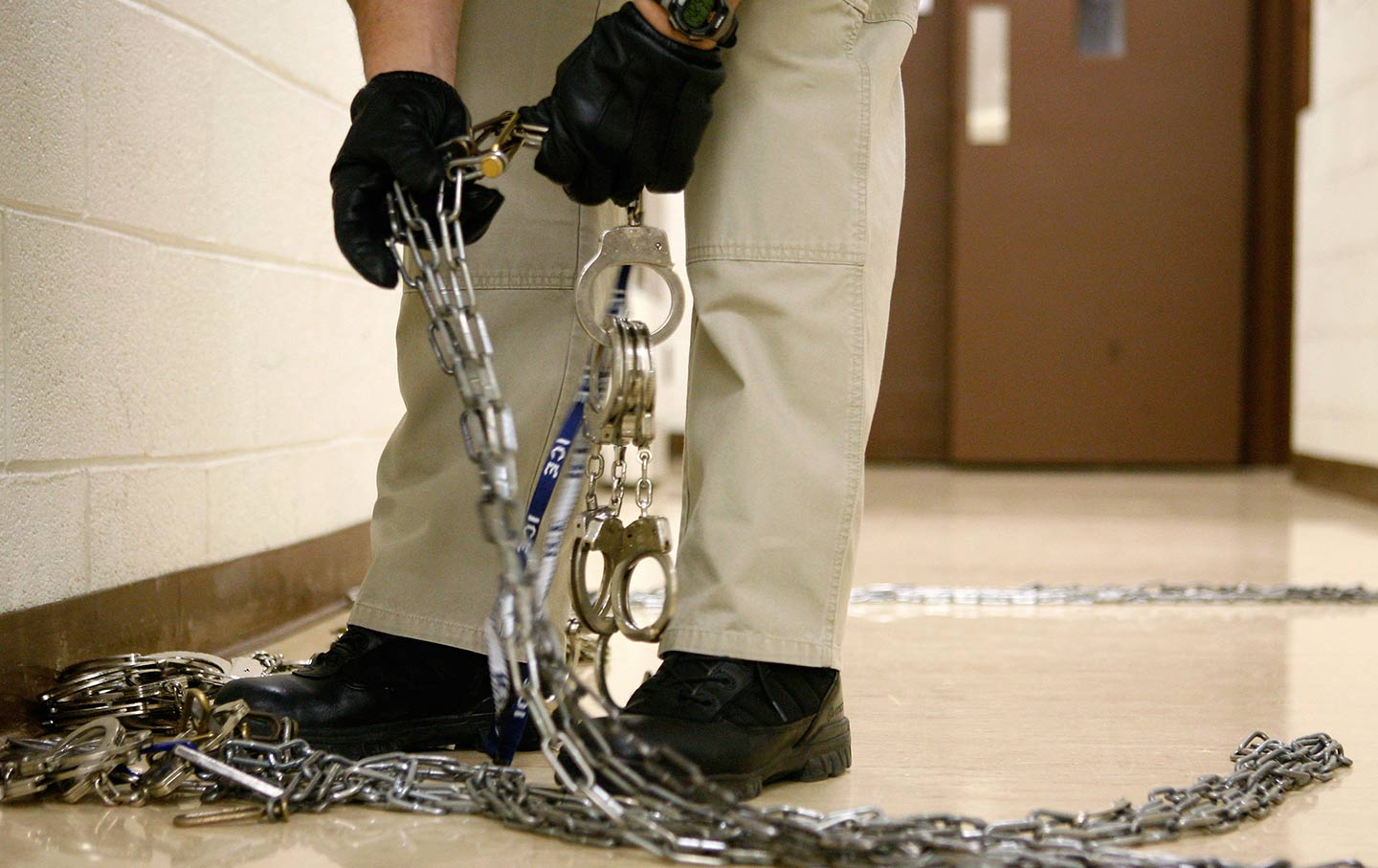
In State v. Garvin, the Court held that police officers cannot “squeeze” a defendant’s pockets to determine the nature of objects in the pocket.

An officer pulled Anthony Garvin over for a traffic infraction. When he noticed a knife on the seat next to Garvin, the officer ordered Garvin out of the car and conducted a search for additional weapons. In the process he discovered a baggie of methamphetamine. At trial the officer testified, “We don’t really pat anymore. It’s more of a squeeze search.”

Garvin moved to suppress the evidence seized, and the trial court denied the motion. He was convicted of possession of a controlled substance, and Court of Appeals upheld the conviction.  The WA Supreme Court granted review.

The court reasoned that the officer was not allowed to manipulate objects within the clothing, and his “squeeze method” exceeded the scope of a valid frisk under the “stop and frisk” rule articulated in Terry v. Ohio, 392 U.S. 1 (1968).  The court added, “Without probable cause and a warrant, an officer is limited in what he can do.  He cannot arrest a suspect, he cannot conduct a broad search.”

My opinion?  Yaaaay!!

Many clients get arrested because police officers obtain evidence unlawfully.  It’s an outrage!  This case is beautiful.  I can’t wait to argue a Garvin motion in my future attempts to suppress unlawfully obtained evidence.   🙂

Please contact my office if you, a friend or family member are charged with a crime. Hiring an effective and competent defense attorney is the first and best step toward justice.

Imprisoned Undocumented Immigrants May Soon Face Early Deportation

How the Deportation Machine Criminalizes Immigrants | The Nation

Hundreds of undocumented immigrants in Washington state prisons will be deported at the end of their sentences. But state officials want to deport many of them early — without serving prison sentences — to save money.

One option is the increased enforcement of a statute which allows for the early deportation of undocumented immigrants who’ve committed non–violent crimes.  Although this law has been on the books for years, it rarely is applied.  Generally, prosecutors do not agree to early deportations without jail because, in their view,  it greatly reduces the consequences for committing a crime.

Nevertheless, prosecutors may be warming up to these early deportations. The head of the Washington Association of Prosecuting Attorneys testified in support of the earlier legislation. Immigration advocates also favor the plan.  Finally, Governor Gregoire has called for a specific agreement between the Department of Corrections and federal immigration authorities which would facilitate such a plan.  It also requires approval from prosecutors and judges.

However, the statute carries a double-whammy: although deportees avoid jail time, they shall be charged with a federal felony if they return.  Additionally, they shall serve the maximum amount of jail which was suspended upon their deportation.  Government data show that illegal re–entry after deportation is the most prosecuted federal crime.  Arizona prisons use a similar deportation program, however, and the re–offender rate is about 2%.

As a side note, illegal immigrants are automatically deported if they commit crimes exposing them to 1+ jail sentence (gross misdemeanors and felonies).  In the case of nonviolent crimes and defendants with little or no history, some prosecutors will agree to a maximum exposure of 364 days instead of 365.  This solution altogether avoids the deportation of illegal immigrants whom the prosecutors deem worthy to stay in the U.S.

Typically, when it comes to the possible deportation of a defendant, prosecutors review the circumstances surrounding the crime, employment history, family ties, immigration status, etc.  These factors affect a prosecutor’s willingness to negotiate.

My opinion?  I support the legislation.  With some reservation.  My #1 concern is ensuring due process rights are not violated.  Defense attorneys MUST ensure the defendant/deportee knows they will serve a HUGE amount of jail — in a federal institution, no doubt — if they return to the U.S. after being deported early.

For that very reason, I believe we’ll see more undocumented defendants exercising their rights to jury trial.  After all, what do they have to lose when negotiations fail?  These defendant already face early deportation, coupled with the threat of prosecutors stacking federal charges if the deportee returns illegally.  Force the government to prove the charges!

Interesting times . . .

Please contact my office if you, a friend or family member are charged with a crime. Hiring an effective and competent defense attorney is the first and best step toward justice.
State v. Hinshaw: Absent Exigent Circumstances, Cops Can’t Enter Your Home Without a Warrant & Arrest for DUI

EXIGENT CIRCUMSTANCES | Austin Criminal Defense Lawyer

Great opinion.

In State v. Hinshaw, the WA Court of Appeals held that absent Exigent Circumstances, police cannot enter a home without a warrant & arrest for DUI.

Here, the Moses Lake Police investigated reports of a car unlawfully driving on a bike path.  Police search the path.  They find Mr. Hinshaw on a bike close to the path.  He said he was a passenger in the suspect car, but denies driving.  They release him.

Later, the police find the suspect car in his driveway.  It had a flat tire.  They knock on the door.  He answers the door, yet refuses to come out.  He admits to drinking earlier.  Officers grab his arm, go inside of his home, and arrest him for DUI.  They are concerned his BAC level was dissipating.

The Court of Appeals rejected the State’s argument that “exigent circumstances” justified Mr. Hinshaw’s warrantless seizure.  The Court saw several errors in the police officer’s conduct.   First, the officers failed to establish how quickly the BAC would/could dissipate.  Second, the officers could not estimate how long it would take to get a warrant.

Third, although the police had probable cause to believe Mr. Hinshaw became intoxicated and drove home, the reckless operation of the car and consequent threat to public safety had ended.  Mr. Hinshaw was neither armed nor dangerous.  He posed no threat to the public or officers.  His car was disabled.  Consequently, exigent circumstances did not exist.

My opinion?  Great opinion!  The Court of Appeals saw through the State’s smoke and mirrors.  This was not a case about exigent circumstances.  An emergency never existed!  No, this was a bona-fide; unlawful exercise of “arrest first, ask questions later” on the part of the police.  Clearly unlawful.  Kudos to the Court of Appeals.

Please contact my office if you, a friend or family member are charged with a crime. Hiring an effective and competent defense attorney is the first and best step toward justice.


White House Czar Calls for End to ‘War on Drugs’


Agent of change: CBP boss Gil Kerlikowske announces he will retire in December

Unbelievable.  Awesome sign of the times.  Gil Kerlikowske, the new White House drug czar, signaled Wednesday his openness to rethinking the government’s approach to fighting drug use.

The Obama administration’s new drug czar says he wants to banish the idea that the U.S. is fighting “a war on drugs,” a move that would underscore a shift favoring treatment over incarceration in trying to reduce illicit drug use.

“Regardless of how you try to explain to people it’s a ‘war on drugs’ or ‘war on product,’ people see a war as a war on them,” he said.  We’re not at war with people in this country.

Mr. Kerlikowske’s comments are a signal that the Obama administration is set to follow a more moderate — and likely more controversial — stance on the nation’s drug problems.  Prior administrations talked about pushing treatment and reducing demand while continuing to focus primarily on a tough criminal-justice approach.

My thoughts?  IT’S ABOUT TIME a U.S. drug czar made sense!!!

True story on Kerlikowske: I was living in Seattle when a big snow came.  Attending law school.  Walking around downtown Seattle with a friend.  A black SUV rolls by.  Stops by a car that was stuck in the snow.  Two police officers get out.  One looks highly decorated.  Both officers  push the skidding car off the ice.  It drives away, freed from its frozen trap.

I immediately recognized the decorated officer as then-Seattle Police Chief Gil Kerlikowske.  I say, “Yo man, that was cool!”  He smiles, salutes, and jumps back into the SUV.  Drives away.

As far as police officers go, Kerlikowske was a good one.  Had his head on straight.  Gained respect from Seattle’s black community.  He was an advocate, a reasonable guy, and bridged ideological differences.  Obama chose right.

Please contact my office if you, a friend or family member are charged with a crime. Hiring an effective and competent defense attorney is the first and best step toward justice.

Voting Rights Restored!

Voter Information for WA State Residents Who Are or Have Been Incarcerated,  Unhoused, Disabled, Need Language Assistance, and more | The Church Council  of Greater Seattle

Thank you to all who took action on HB 1517!  This important measure will automatically restore the right to vote to citizens who were entangled with the criminal justice system.

Governor Chris Gregoire signed the bill into law on Monday, May 4, 2009.  The new law will reform Washington’s convoluted and unfair system for restoring voting rights.

Washington now becomes the 20th state in the last decade to ease voting restrictions for people with criminal histories who are living, working and raising families in the community.  Our victory is part of a nationwide movement to assure that our democracy reflects the voices of American citizens.

Let freedom ring.

Please contact my office if you, a friend or family member are charged with a crime. Hiring an effective and competent defense attorney is the first and best step toward justice.

‘How can you defend those people?’

Why defense lawyers defend killers and rapists | Pittsburgh Post-Gazette

Great article discusses why defense attorneys continue to zealously defend people accused of crime.

People ask me the above question quite often.  My answer?  Everyone deserves the right to a fair trial.  It’s simply un-American to assume people are guilty, lock them up, and throw away the key.  There are times when the Prosecutor’s facts are weak.  Witnesses lack credibility.  Constitutional rights are tossed aside as police search cars, raid homes, and generally use people’s statements against them at trial.

My role is to make sure the process functions correctly.  No, it’s not easy work.  But it’s incredibly fulfilling.

Please contact my office if you, a friend or family member are charged with a crime. Hiring an effective and competent defense attorney is the first and best step toward justice.