Attorney Alexander Joins the National Association Distinguished Counsel

National Association of Distinguished Counsel | The Nation's Top One Percent

The National Association of Distinguished Counsel selected attorney Alexander F. Ransom for membership among the nation’s top attorneys.

The National Association of Distinguished Counsel is an organization dedicated to promoting the highest standards of legal excellence. The mission of the NADC is to objectively recognize the attorneys who elevate the standards of the Bar and provide a benchmark for other lawyers to emulate.

By virtue of the incredible selectivity of their research process, only the elite few are invited to join the ranks of the NADC. Specifically, less than 1% of practicing attorneys in the United States are afforded the opportunity to be named “Nation’s Top Attorneys.” The recipients of this prestigious award have demonstrated the highest ideals of the legal profession.

Please contact my office if you, a friend or family member are charged with a crime. Hiring an effective and competent defense attorney is the first and best step toward justice.


Ignition Devices In All New Cars ?

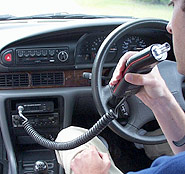
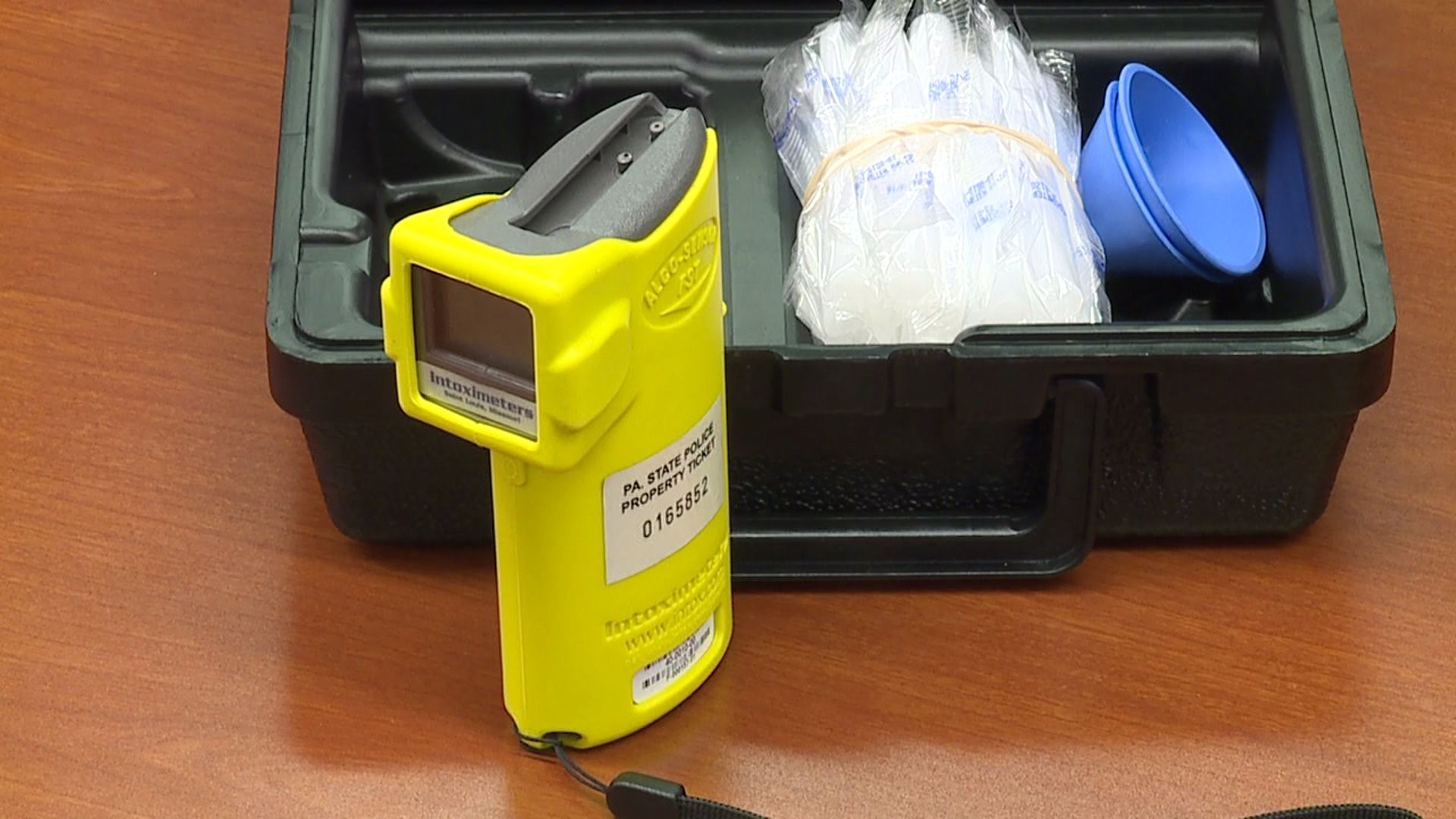
There’s developing technology exploring the possibility that a fingerprint-based ignition interlock device system may someday be installed in new vehicles in the hopes of stopping impaired drivers from operating their vehicles. In other words, sobriety tests in all new cars might prevent most drunk driving deaths.

Installing devices in new cars to prevent drunk drivers from starting the engine could prevent 85 percent of alcohol-related deaths on U.S. roads, saving tens of thousands of lives and billions of dollars from injury-related costs, according to a new analysis.

“Alcohol interlocks are used very effectively in all 50 states as a component of sentencing or as a condition for having a license reinstated after DUIs, but this only works for the drunk drivers caught by police and it doesn’t catch the people who choose to drive without a license to avoid having the interlock installed,” said lead author Dr. Patrick Carter, an emergency physician with the University of Michigan Health System in Ann Arbor.

Most drunk drivers make about 80 trips under the influence before they are stopped for a DUI, Carter said. “If we decided that every new car should have an alcohol ignition interlock that’s seamless to use for the driver and doesn’t take any time or effort, we suddenly have a way to significantly reduce fatalities and injuries that doesn’t rely solely on police.”

Carter and colleagues used U.S. records of traffic accidents and fatalities to determine how many involved drunk driving and then estimated how many of these incidents could be avoided in the future by fitting new cars with alcohol-interlock devices, which detect blood-alcohol levels and prevent drivers above a certain threshold from starting the car.

Then, they estimated the numbers of deaths and injuries that could be prevented in the first year that all new cars sold had screening systems, and assumed it would take 15 years for older models to be replaced with new vehicles.

Over the 15-year implementation period, interlocks may eliminate about $343 billion in costs from fatalities and injuries related to drunk driving, the researchers estimate. Assuming the device costs $400 per vehicle and is 100 percent accurate, the interlock would pay for itself after three years by way of avoided injury costs.

Getting DADSS into all vehicles can eliminate the element of chance involved in catching drunk drivers under our current system that relies on police, said Adrian Lund, president of the Insurance Institute for Highway Safety.

Unlike the alcohol ignition interlocks which require you to blow into a devise and are used for convicted drunk drivers, DADSS is a driver assist system that would be seamless, take less than half a second, and use infrared light to measure a driver’s blood alcohol content in the breath or through the fingertips, which is believed to be far more reliable.

My opinion? Although noble, these devices may cause legal problems and litigation than they’re worth. How accurate are the devices? Are they calibrated regularly? Do they store information which can be used against a defendant accused of DUI? Would the devices also test for the presence of drugs? If so, what if the driver has a prescription for the drugs? Only time will tell . . .

Please contact my office if you, a friend or family member are charged with a crime. Hiring an effective and competent defense attorney is the first and best step toward justice.
State v. Henderson: Lesser Included Jury Instructions


In State v. Henderson, the Washington Supreme Court decided that the jury of a defendant charged with first degree murder by extreme indifference should have been instructed on the lesser included offense of first degree manslaughter.

Some background on “Lesser Included” Crime is necessary. In short it is a lesser crime whose elements are encompassed by a greater crime. A lesser included offense shares some, but not all, of the elements of a greater criminal offense. Therefore, the greater offense cannot be committed without also committing the lesser offense. For example, Manslaughter is a lesser included offense of Murder, Assault is a lesser included offense of Rape, and Unlawful Entry is a lesser included offense of Burglary.

Here, the defendant Marsele Henderson fired gunshots at a house party on November 16, 2008. One of the most important – and disputed – facts in this case is how many people were in the area in front of the house at this time just prior to shots being fired toward the house. Was it a small group of people or a large group? Witness testimony on this point varied significantly.  This question mattered because whether Henderson shot into a large crowd of people or whether he shot toward an area with very few people determined the nature of the crime.

A month after the shooting, prosecutors charged Henderson with Murder in the First Degree by Extreme Indifference under RCW 9A.32.030(1)(b). At trial, Henderson asked that the jury be instructed on the lesser included charge of Manslaughter in the First Degree under RCW 9A.32.060.  Initially, the Prosecutor agreed. However, the Prosecutor later changed its position. The trial court denied the defendant’s motion for a lesser included jury instruction. The jury convicted Henderson of Murder in the First Degree by Extreme Indifference. Henderson appealed, contending that the trial court erred when it refused to instruct the jury on Manslaughter in the First Degree. The Court of Appeals decided that Henderson should have been granted the lesser-included jury instruction. The state appealed.

Ultimately, the Washington Supreme Court decided the issue of whether Henderson was entitled to a jury instruction on Manslaughter First Degree as a lesser included charge to Murder in the First Degree by Extreme Indifference.

The WA Supremes upheld the Court of Appeals and decided that Henderson should have been granted the lesser-included jury instruction. It affirmed the Court of Appeals and reversed Henderson’s conviction.

In reaching this decision, the court reasoned that under State v. Workman, a defendant is entitled to an instruction on a lesser included offense when (1) each of the elements of the lesser offense is a necessary element of the charged offense and (2) the evidence in the case supports an inference that the lesser crime was committed. Under this framework, the court based their conclusion on two unique aspects of the case.

First, this crime involved a shooting outside a house party and the evidence consisted largely of eyewitness testimony that varied widely and was often conflicting. Thus, viewing the evidence in the light most favorable to the defendant results in a much more significant shift than it would in cases with uncontroverted evidence.

Second, the definitions of the lesser crime (disregarding a substantial risk that a homicide may occur) and the greater crime (creating a grave risk of death) are very close to each other-much closer than is typical.

As a result, the WA Supremes could not say that no jury could have rationally found that the defendant committed the lesser crime rather than the greater crime. Thus, the court held that the jury should have been allowed to determine whether Henderson committed the greater or lesser crime.

My opinion? Good decision.

In criminal trials, juries are given the option of convicting defendants of lesser included offenses when warranted by the evidence. Giving juries this option is crucial helps our criminal justice system because when defendants are charged with only one crime, juries must either convict them of that crime or let them go free. In some cases, that will create a risk that the jury will convict the defendant despite having reasonable doubts.

To minimize that risk, courts prefer to err on the side of instructing juries on lesser included offenses. Under State v. Fernandez-Medina, a jury must be allowed to consider a lesser included offense if the evidence, when viewed in the light most favorable to the defendant, raises an inference that the defendant committed the lesser crime instead of the greater crime. If a jury could rationally find a defendant guilty of the lesser offense and not the greater offense, the jury MUST be instructed on the lesser offense.

Please contact my office if you, a friend or family member are charged with a crime. Hiring an effective and competent defense attorney is the first and best step toward justice.

State v. Budd: Ferrier Warnings Improperly Given

When Police Knock on the Door: What Are My Rights? - The Seattle Criminal  Lawyer Blog

Good decision. In State v. Budd, the WA Court of Appeals decided a law enforcement officer must properly deliver all three parts of the Ferrier warnings before entering a residence.

Some background on Ferrier warnings is necessary. In State v. Ferrier, 136 Wn.2d 103, 960 P.2d 927 (1998) the WA Supreme Court held that, before entering a citizen’s home without a warrant, a law enforcement officer must (1) ask the citizen for consent, (2) inform the citizen that he can revoke consent at any time and (3) notify the citizen that he can limit the scope of the entry into the home. If an officer fails to provide these Ferrier rights/warnings, then any evidence obtained from the search is “fruits of the poisonous search” and also subject to being suppressed.

Appellant Michael Allen Budd was convicted of Possession of Depictions of Minors Engaged in Sexually Explicit Conduct under RCW 9.68A.070. He contends that the trial court erred in its denial of his ER 3.6 motion to suppress evidence obtained in a warrantless search of his residence by the officers investigating the case. He argued the Ferrier warnings were insufficient.

Washington State Patrol’s Missing and Exploited Children Task Force  received an anonymous “cybertip” from the National Center for Missing and Exploited Children. The anonymous source declared that Michael Allen Budd communicated with young girls on Yahoo! Messenger and Windows Live Messenger, both free online chat services. The anonymous source stated that he or she had seen child pornography on Budd’s computer.

On March 11,2009, Detective Kim Holmes travelled to Ephrata to Mr. Budd’s home. In law enforcement, a “knock and talk” is an investigative technique where one or more police officers approaches a private residence, knocks on the door, and requests consent from the owner to search the residence. Law enforcement performs the “knock and talk” when criminal activity is suspected, but officers lack probable cause to obtain a search warrant.

Detective Kim and other officers made contact with Holmes at his home. Although many of the facts are in dispute, it appeared that Detective Kim did not properly discuss Ferrier warnings with Mr. Holmes.

The court reasoned that Detective Holmes’ police report lacked any mention of Holmes’ informing Budd that he had a right to decline consent to enter the home, limit the scope of the search, and revoke consent at any time. Finally, the report implied that Holmes misrepresented that a court would authorize a search warrant. Based on this, the Court of Appeals ruled that the detective did not voice all Ferrier warnings before entering the home, and that law enforcement officers MUST deliver all cautions before entering the residence. Consequently, the Court reversed the conviction and dismissed the case.

My opinion? I agree with this excerpt from the Court of Appeals:

Viewing child pornography is a hideous crime that robs children of innocence and scars them for life. Those who watch child pornography obsessively gamer gratification through violent acts on defenseless children. Catching one at the crime takes diligence since the viewer indulges in the privacy of his home, often by elaborate security measures on his computer. Thus, we reluctantly reverse the trial court.

Nevertheless, as judges, we pledged to uphold the constitution and the endearing rights protected by the constitution. Those engaged in hideous conduct are entitled to the protections afforded under our state and federal constitution including the right to be free of unlawful searches and seizures.

Well said.

Please contact my office if you, a friend or family member are charged with a crime. Hiring an effective and competent defense attorney is the first and best step toward justice.
State v. Samalia: Search of Abandoned Cell Phone is Lawful

Why this B.C. woman's 'cell phone in the car' ticket should never have been  issued - Vancouver Is Awesome

In State v. Samalia, the WA Court of Appeals upheld the defendant’s conviction for Possession of a Stolen Motor Vehicle under RCW 9A.56.068 because the police used evidence from the defendant’s cell phone found in the abandoned stolen vehicle after he fled from the vehicle and evaded pursuit.

Yakima Police Officer Ryan Yates was on patrol when his vehicle license plate reader indicated he had passed a stolen vehicle. The officer followed the stolen vehicle. The driver got out of the vehicle and faced towards Officer Yates. The driver would not obey Officer Yates’ command to get back in the vehicle and fled. Officer Yates pursued the male driver but he got away.

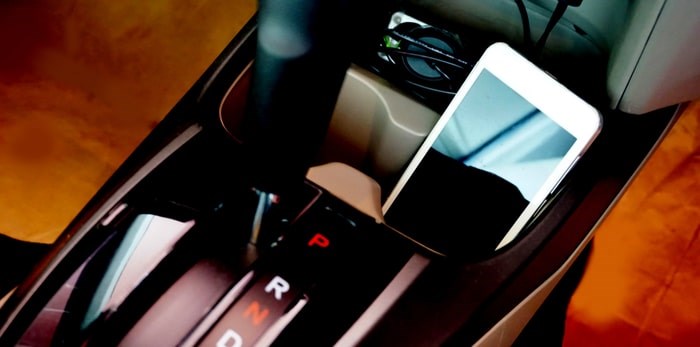
Officer Yates searched the car and found a cell phone in the center console. Officer Yates conducted some investigations and discovered that the phone belonged to the defendant Mr. Samilia. Later, Officer Yates located Mr. Samalia’s picture in a police database. Officer Yates then identified Mr. Samalia from the database picture as the fleeing man who had been driving the stolen vehicle.

The State charged Mr. Samalia with possession of a stolen motor vehicle. He moved unsuccessfully to suppress the cell phone evidence under ER 3.6. From the above facts, the trial court concluded the cell phone was abandoned, therefore, Mr. Samalia no longer had an expectation of privacy in it. Following a bench trial, the court found Mr. Sam alia guilty as charged. He appealed.

The court reasoned that a warrantless search and/or seizure violates the WA Constitution unless it falls under one of ”’a few jealously guarded exceptions” to the warrant requirement. Searching voluntarily abandoned property is an exception to the warrant requirement. In other words, law enforcement may retrieve and search voluntarily abandoned property without a warrant or probable cause.

The court also considered the status of the area where the cell phone was located. Here, the search area was an unattended stolen vehicle that Mr. Samalia had been driving and had fled from when a police officer approached and directed him to return to the vehicle. Consequently, the court found that a suspect’s hasty flight under these circumstances is sufficient evidence of an intent to abandon the vehicle. In conclusion, because the cell phone was abandoned; used in pursuit of the fleeing suspect, and not directly used to identify Mr. Samalia, the court held that the trial court did not err in denying suppression of Mr. Samalia’s identification from a police database.

My opinion?

I disagree with the court’s decision. This decision is too great a leap in the wrong direction; and fails to follow Washington’s current jurisprudence. Despite the Court’s reasoning, there is NO reported Washington decision which has directly addressed whether a citizen relinquishes his reasonable expectation of privacy in the data on his cell phone by leaving the phone behind at the scene of a crime.

Our jurisprudence says police must generally secure a warrant before conducting a search of data on a cell phone – even one that has been left behind in a place where its owner has no privacy interest. Requiring a search warrant will assure that there is probable cause to believe that the defendant is involved in criminal activity and that evidence of the criminal activity can be found in the data on the cell phone.

Please contact my office if you, a friend or family member are charged with a crime. Hiring an effective and competent defense attorney is the first and best step toward justice.
Tribes Free To Prosecute Non-Indians for Certain Crimes

Native American Women ilustration

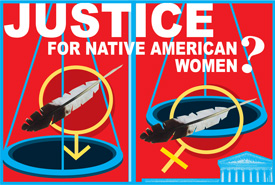
The Skagit County Herald reported that American Indian tribes that meet certain criteria now have the authority to prosecute non-Indians for a limited set of domestic violence crimes, a shift supporters hope will reduce the high rate of violence on reservations.

Apparently, three tribes in Arizona, Oregon and Washington state have exercised that power for more than a year under a pilot project approved by the U.S. Department of Justice. Together, the tribes have brought more than two dozen domestic violence cases against non-Indians who live or work on their reservations, according to the National Congress of American Indians. In Washington, the Tulalip Tribe was approved as part of the pilot project in February 2014.

A 1978 U.S. Supreme Court ruling stripped tribes of any criminal jurisdiction over non-Indians on their reservations. 

However, the Violence Against Women Reauthorization Act of 2013 allowed tribes to charge non-Indians who are married to or in a partnership with a tribal member for domestic violence crimes and violations of protection orders. The Justice Department has said that American Indian women suffer from domestic violence at rates more than double national averages.

To ease concerns from some members of Congress, tribes have to ensure that jury pools include non-Indians and that their court systems afford defendants the same rights as state and federal courts do. The changes to the Violence Against Women Act also allow defendants to seek review of a tribal court decision in federal court.

Please contact my office if you, a friend or family member are charged with a crime. Hiring an effective and competent defense attorney is the first and best step toward justice.

State v. Vanness: Unlawful Search of a Lockbox Inside a Backpack.

LOCKMED GUARDIAN LARGE Combination Lockbox

In State v. Vanness, the WA Court of Appeals Division I decided that the warrantless search of a locked box found inside a backpack that the defendant was wearing at the time of arrest violated both the Fourth Amendment and Washington Const. art. I, § 7.

Defendant VanNess was arrested for having outstanding warrants in Everett, WA. When arrested, VanNess was wearing a backpack and carrying a bag. A police officer removed the backpack and asked permission to search it. VanNess did not respond. Everett Police Department had a policy requiring officers to search backpacks for dangerous items. Following that policy, officers searched VanNess’s backpack and found knives. They also found a small box with a combination lock.

The police officer used a flathead screwdriver to pry open the box. He looked inside. Although he did not see any dangerous items, he saw a scale and small plastic “baggies” and smelled vinegar, which he associated with heroin. The box was delivered to the Everett Police Department’s property room.

Police obtained a warrant to search the box. They found suspected methamphetamine and heroin, a digital scale, a glass pipe, and several plastic baggies. The Prosecutor charged VanNess with Possession of Heroin with Intent to Deliver and Possession of Methamphetamine with Intent to Deliver. Both crimes are Class B felonies. The trial court denied VanNess’s motion to suppress. At trial, the court admitted the evidence. A jury found VanNess guilty of all charges. VanNess appealed.

A warrantless search is per se unreasonable, unless the State can prove a “carefully drawn and jealously guarded exception” applies. These exceptions include a search incident to arrest and an inventory search. If an exception does not apply, a warrantless search is illegal and the exclusionary rule prevents the State from presenting the illegally seized evidence. Here, the defendant argued that the inventory search of his lockbox violated his Constitutional rights.

The Court of Appeals agreed. It reasoned that although State v. Stroud and State v. Valdez each involved a locked container found in an automobile, the court’s consideration of the Chimel v. California applies just as well to the facts of our case:

“Where a container is locked and officers have the opportunity to prevent the individual’s access to the contents of that container so that officer safety or the preservation of evidence of the crime of arrest is not at risk, there is no justification under the search incident to arrest exception to permit a warrantless search of the locked container.”

Under Chimel, the Court reasoned that police officers may conduct a warrantless inventory search (1) to protect the arrestee’s property, (2) to protect the government from false claims of theft, and (3) to protect police officers and the public from potential danger. Courts generally uphold inventory searches conducted according to standardized procedures which do not afford police officers excessive discretion and when they serve a purpose other than discovery of evidence.

The Court of Appeals decided that here, an officer’s compliance with an established police procedure does not constitutionalize an illegal search. Similarly, the court rejected the claim that the possibility of a bomb or dangerous firearm in the locked box established a “manifest necessity” to search the box. They reasoned that without exigent circumstances, a legitimate inventory search only calls for noting such an item as a sealed unit. With that the court concluded that neither the search incident to arrest nor the inventory search exception applies to the officer’s initial search of VanNess’s locked box. Therefore, the police unconstitutionally searched the locked box.

My opinion? Good decision. It appears the Court of Appeals announced a new balancing test for some items found on an arrested person at the time of arrest. Basically, if the item to be searched falls within a category that implicates an arrestee’s significant privacy interests, the court must balance the government interests against those individual privacy interests. Only when government interests in officer safety and evidence preservation exceed an arrestee’s privacy interest in the category of item to be searched may it be searched incident to arrest without a warrant.

Good decision.

Please contact my office if you, a friend or family member are charged with a crime. Hiring an effective and competent defense attorney is the first and best step toward justice.

Bill Seeks Prison Time for Drone Crimes

Drone and Moon

Interesting news article from the Skagit Valley Herald. In an article titled, “Senate OKs Bill That Would Add Prison Time For Drone Crimes,” The WA Senate passed a bill that would allow prosecutors to seek an extra year in prison for offenders who use a drone aircraft while committing a crime.

Senate Bill 5499 passed on a 34-15 vote Tuesday and now heads to the House forconsideration. It adds the allegation of a “nefarious drone enterprise” to Washington criminal law. The state currently has no restrictions on the use of drones, although 20 other states have enacted laws on drone-related issues.

The bill adds a year to the sentencing range that dictates how judges can punish an offense. The measure was one a handful of other bills concerning drones that were filed in the Legislature this session in the wake of Gov. Jay Inslee’s veto of a bill last year that would have restricted how state and local government agencies use the unmanned aircraft.

My opinion? Although sad, Senate Bill 5499 was foreseeable. For example, under  RCW 46.20.285, defendants convicted of felonies get their driver’s licenses revoked for 1 year if a vehicle was used during the commission of a crime. It makes sense, therefore, that Prosecutors would get aggressive toward defendants if drones were used to further the commission of a crime. Sad but true.

Please contact my office if you, a friend or family member are charged with a crime. Hiring an effective and competent defense attorney is the first and best step toward justice.
Washington Legislature Passes Bill Supporting DNA Testing of Rape Kits.

That was me on the shelf': Maryland lawmakers weigh legislation requiring  rape kits be tested - Baltimore Sun

On March 2, 2015, the Washington House Appropriations committee voted “Yes” on House Bill 1068; which supports DNA testing of rape kits sitting in evidence rooms across Washington Counties. The bill passed 82-15.

Essentially, numerous Washington counties – including Whatcom County – could help find serial rapists. House Bill 1068 arrives on the heels of recent controversy that rape kit evidence containing DNA evidence has been ignored by police departments statewide.

The Bellingham Herald ran two articles on this news. One story, titled Prosecutor: Testing Evidence Kits Can Lead to Finding Repeat Rapists discussed people’s responses to House Bill 1068.

The article mentions that Prosecutors like Rick Bell of Ohio support House Bill 1068. He claims that out of 6,000 kits tested, 2,244 received a hit to a known offender in a national database. Additionally, of the rapists indicted by his his office in Cuyahoga County, 30 percent are serial rapists. “Those serial offenders were going undetected, in part because labs couldn’t process all cases, so kits involving acquaintance rapes weren’t tested,” said Bell.

Also according to the article, Western Washington University college students like Heather Heffelmire, who is working in Olympia as the Legislative Liaison for Western Washington University’s Associated Students, testified in favor of House Bill 1068 during a public hearing in January. She said one of the main legislative priorities for WWU’s student body this year is to support survivors of sexual violence. “If you think about assault on campuses, it’s not like a predator does one assault — it’s usually a pattern of behavior,” Heffelmire said. “If you’re not having these kits tested, you can’t find that out.”

Additionally, Leah Gehri, the Director of Emergency Services at St. Joseph hospital in Bellingham WA, said she thinks HB 1068 is timely. “When you think about how long DNA evidence has been around, … at one point there weren’t a lot of DNA profiles hanging out there, they just didn’t have a lot of them,” Gehri said. “Now however, 20 years later, when profiles are quite common, the likelihood that an untested kit would now match up against a perpetrator in the system is more likely than it ever has been.”

Another article from the Bellingham Herald titled, Washington Lawmaker Tries to Tackle Thousands of Untested Rape Kits in State discusses the efforts of Rep. Tina Orwall, D-Des Moines toward having House Bill 1068 passed. 

The specific language House Bill 1068 is as follows:

Substitute offered in the House on January 23, 2015, requires a law enforcement agency to submit a request for laboratory examination within 30 days of receiving a sexual assault examination kit, provided that the victim or the victim’s legal guardian has consented to analysis of the kit as part of a sexual assault investigation. Specifies that failure to comply with the 30-day deadline does not create a private right of action against the law enforcement agency and is not a basis to exclude evidence in a court proceeding or to set aside a conviction or sentence. Creates a work group to study the issue of untested sexual assault examination kits in Washington, which must file an annual report through June 30, 2018.

My opinion? As a defense attorney, I support the notion that evidence garnered from the DNA testing of rape kits could be probative, relevant and cumulative in proving that the the perpetrator had a pattern of rape. Nevertheless, I have two concerns:

First, while I understand and agree with intent to have kits processed as quickly as possible, the timelines set forth in this proposal are probably unattainable with existing resources and do not take into account the complexities of processing kits. The 30-day timeline is very problematic for crime labs and is not feasible without a huge influx of resources (equipment, personnel, and possibly larger facilities).

Second, House Bill 1068 does not take into account the multitude of legal circumstances surrounding these kits.  For example, in a number of rape cases, the identity of the involved parties is not in question and both parties affirmatively indicate a sexual act occurred. Here, the issue is consent, not identity. Consequently, DNA analysis would only confirm what is already known.

In all likelihood, the latter issue will rest on the shoulders of jury trial judges who decide pretrial motions to admit or suppress DNA evidence in rape cases. In other words, we’ll see what happens . . .

Please contact my office if you, a friend or family member are charged with a crime. Hiring an effective and competent defense attorney is the first and best step toward justice.

Marijuana / THC Breathalyzer Available Soon.

Marijuana breathalyzer technology is here, and it's coming for drivers |  fox43.com

Technology appears to be catching up.

Since Colorado and Washington legalized the recreational use of marijuana in 2014, and the growing trend to legalize pot in some capacity across the nation, there is an increased interest in addressing drugged driving.

However, today’s standardized testing marijuana intoxication is not as simple as detecting alcohol. More science and research are required. It the meantime, technology will be coming to market, such as the marijuana breathalyzer being developed by Cannabix Technologies, Inc. to give police officers an on-site tool to enhance detection of THC, the psychotropic metabolite in marijuana.

In the future, devices of this type will likely be dialed in by the forensic community and become an integral element in identifying marijuana-intoxicated drivers and in other settings, including workplaces and general consumer use, just as the alcohol breathalyzer is today.

My opinion? We saw this coming. It’s almost humorous. Typically, the law lags behind technological advances. Here, technology appears to be lagging behind the evolution of marijuana legalization! Interesting development, no? This device is another tool in the hands of law enforcement – along with Drug Recognition Experts, and search warrants for the testing of blood – for investigating DUI charges.

Please contact my office if you, a friend or family member are charged with a crime. Hiring an effective and competent defense attorney is the first and best step toward justice.